The Trust Gap: Why Lawyers, Doctors, and Therapists Lose Clients After Google Already Did Its Job
A lawyer can rank for “workers comp attorney near me” and still lose the lead. A doctor can appear for “orthopedic doctor in Miami” and still watch the patient click away. A therapist can bring in organic traffic from someone searching “anxiety therapist near me” and still lose that person to a directory, a bigger practice, or the quiet little voice in the visitor’s head saying, “I am unsure about this.”
That moment has a name. The trust gap.
The trust gap is the space between being found and being chosen. It is where private practice SEO gets real. Ranking gives a lawyer, doctor, therapist, or private practice a chance. Trust turns that chance into a call, consultation, booking, intake form, or appointment request. Google can bring someone to the door. The website still has to make the room feel safe enough to enter.
This is where Get Organic Authority lives. The goal is simple and strangely rare in SEO land, where people still celebrate traffic graphs like cavemen discovering fire. We help high-trust private practices turn expertise into visibility, and then turn visibility into confidence through long-form SEO content, service pages, internal links, topic clusters, and writing that sounds like a real human understands the stakes.
Lawyers, doctors, and therapists sit in a different category than restaurants, roofers, and shoe stores. A person choosing a personal injury lawyer may be scared about bills, pain, and the future. A patient choosing a doctor may be worried about symptoms, cost, diagnosis, and credibility. A person choosing a therapist may be carrying shame, trauma, panic, relationship pain, or the heavy feeling that something has to change soon. These searches carry emotional weight. They also carry risk.
That is why SEO for private practices needs more than keywords sprinkled over pretty paragraphs like parsley on a disappointing hotel omelet. The content has to do three jobs at once. It has to help Google understand the page. It has to help the visitor understand the next step. It has to help the nervous human behind the screen feel enough trust to move forward.
The Click Is Only the First Door
A click feels like progress because it is visible. Analytics records it. Search Console notices it. The website owner sees organic traffic and briefly experiences the dangerous emotion known as hope. Then the calendar stays open, the phone stays quiet, and the inbox keeps giving tumbleweed cosplay.
For lawyers, doctors, therapists, and private practices, traffic is only the first door. The visitor still has to decide if the practice feels credible, specific, current, safe, reachable, and worth contacting. That decision happens quickly, and it happens through dozens of tiny signals.
Nielsen Norman Group identifies four major credibility factors in web design: design quality, upfront disclosure, comprehensive and current content, and connection to the rest of the web. That matters because high-trust visitors are constantly scanning for evidence. They want a site that looks legitimate, explains clearly, provides useful information, and connects outward in ways that prove the practice exists in the real world. Nielsen Norman Group trust research has aged annoyingly well because human behavior keeps being human behavior, the internet’s longest-running bug.
Stanford’s Web Credibility Project also found that credibility improves when websites make information easy to verify, show a real organization behind the site, highlight expertise, show honest people behind the business, and make contact information easy to find. Those guidelines were based on research involving more than 4,500 people. For private practice SEO, this is gold. It means trust signals belong inside the content, layout, service pages, bio pages, review strategy, and internal linking plan. They are part of conversion. They are also part of perceived authority. Stanford Web Credibility Guidelines give private practices a useful credibility checklist without the usual marketing fog machine.
High-trust visitors scan for reasons to stay
A potential client or patient rarely lands on a private practice website with full emotional neutrality. Lawyers, doctors, and therapists are often found during high-stakes moments. The visitor is comparing choices, assessing risk, and asking silent questions the website must answer.
· Does this person understand my specific situation?
· Does this practice handle cases or concerns like mine?
· Can I verify their experience?
· Do they explain the process in plain language?
· Do they make the next step clear?
· Will I feel embarrassed, judged, rushed, or sold to?
· Is this page current, real, and trustworthy?
The best service pages for small businesses answer those questions before the visitor has to ask. A weak service page forces the visitor to do emotional labor. A strong page lowers friction. It says, in effect, “You are in the right place. Here is what this means. Here is how we help. Here is what happens next.”
That is the difference between a website that merely ranks and a website that converts.
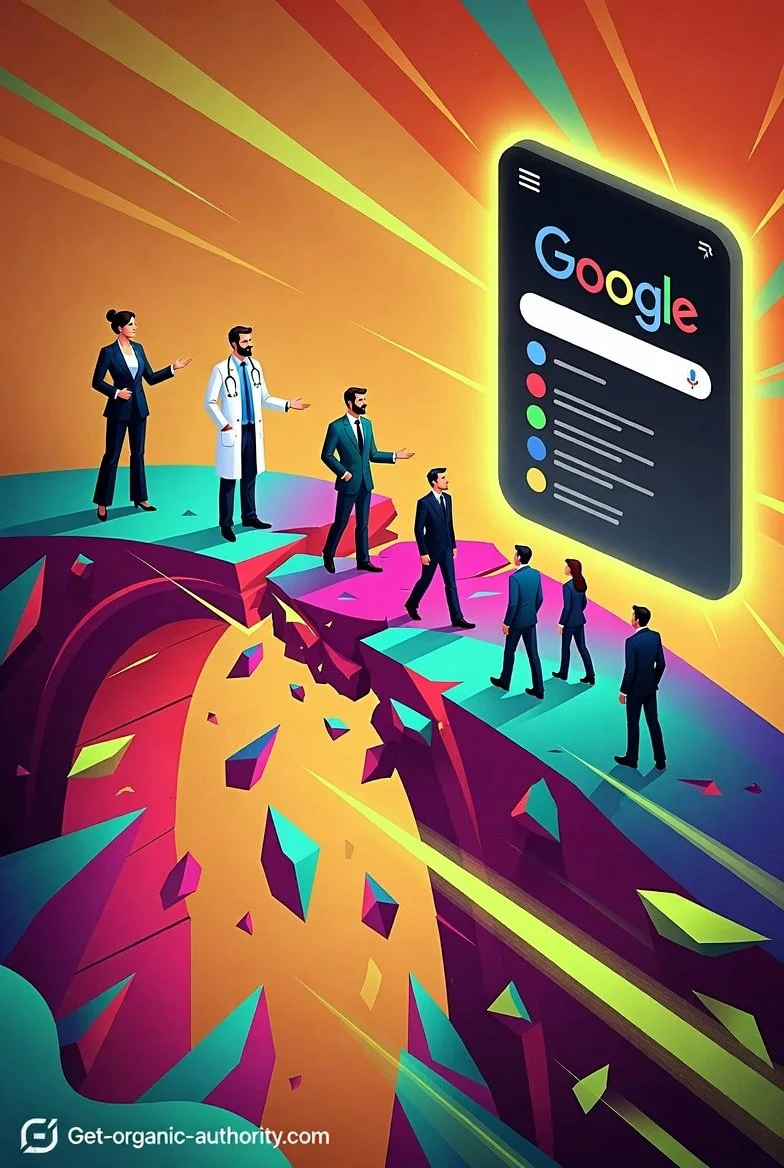
Private practice SEO is a trust architecture problem
SEO for lawyers, SEO for doctors, and SEO for therapists often gets discussed like a bag of disconnected chores. Add keywords. Write blogs. Optimize title tags. Get reviews. Build links. Update Google Business Profile. Publish more. Smile into the void.
Those pieces matter, but the real system is bigger. Private practice SEO is trust architecture. Every page should help the visitor move from uncertainty to clarity. Every article should connect to a larger topic cluster. Every internal link should guide the reader toward a more useful page. Every service page should make the next step feel easier.
Google’s SEO Starter Guide defines SEO as helping search engines understand content and helping users find a site and decide if they should visit through search. That second half gets ignored by people who treat SEO like mechanical keyword farming. The user still has to decide. The page still has to earn the click, earn the read, and earn the action. Google SEO Starter Guide makes this plain enough that even marketing departments may eventually recover.
For a law firm, that means practice area pages should explain injuries, timelines, fees, case types, evidence, and what happens after a consultation. For a medical practice, treatment and condition pages should explain symptoms, diagnosis, provider qualifications, insurance or appointment pathways, and what a patient can expect. For a therapist, service pages should explain who the service is for, what therapy may feel like, how the process works, and what type of client may benefit.
That level of detail supports search intent. It also helps the person stop wandering around your website like a lost intern holding a clipboard.
The private practice trust gap usually starts with vague content
Most professional websites fail softly. They look clean. They sound respectable. They use phrases like “personalized care,” “experienced representation,” “evidence-based support,” and “patient-centered treatment.” These phrases are fine in the way cardboard is fine. They hold shape. They offer very little flavor.
Vague content creates a trust gap because it forces the visitor to guess. A potential therapy client wants to know if the therapist understands panic attacks, trauma responses, relationship shutdown, grief, addiction recovery, or the strange exhaustion that comes from pretending to be fine. A legal client wants to know if the firm understands denied claims, injury documentation, settlement pressure, court timelines, and insurance games. A patient wants to know if the doctor treats their actual condition and has the right experience.
Generic content says, “We help people.” Specific content says, “Here is the problem, here is how it tends to show up, here is what we do, here is what the next step looks like.” That is why search intent for service businesses matters so much. The page has to match the human behind the keyword.
The Three Private Practice Trust Gaps
The trust gap looks different for lawyers, doctors, and therapists. Same monster, different costume. Each vertical carries its own fear pattern, its own conversion friction, and its own proof burden.
The law firm trust gap
A legal visitor often arrives with urgency. They may be injured, accused, denied, threatened, confused, or financially cornered. Legal SEO content has to build confidence without sounding like a billboard that learned to shout indoors.
For law firms, the trust gap usually appears when a page feels too broad. “We fight for you” may sound strong, but it gives the visitor almost nothing to evaluate. Better legal content answers the real questions: What type of case is this? What documents matter? What mistakes hurt a claim? What does the consultation involve? What makes this firm qualified? What happens if the other side denies responsibility? What fees apply? What outcome range is realistic?
That is why a law firm blog should connect informational articles to practice area pages. A post about denied workers compensation claims should guide readers toward a workers compensation service page. A post about car accident medical records should connect to a personal injury page. The blog builds the bridge. The service page invites the consultation. How Law Firms Turn Google Traffic Into Consultations already sits in your ecosystem as the consultation-path article, and this new piece strengthens that lane from the trust side.
The keyword layer should include law firm SEO content, SEO for lawyers, legal content writing, law firm website conversion, and long-tail keywords for lawyers. The human layer should include fear, process, proof, and relief. Lawyers who explain clearly often feel more trustworthy before a single call happens. A clear page becomes the calm adult in the room, which is a rare public service online.
The medical practice trust gap
Medical practice SEO carries a heavier credibility burden because health content sits close to YMYL territory, meaning topics that can affect a person’s health, financial stability, safety, or well-being. Google’s Search Quality Rater Guidelines overview explains that raters use very high standards for YMYL pages because low-quality pages can negatively affect people. It also frames trust as the extent to which a page is accurate, honest, safe, and reliable. Google Search Quality Rater Guidelines overview is worth reading if you enjoy watching Google say the quiet part with a 36-page PDF.
For doctors and healthcare practices, the trust gap shows up when content sounds polished but lacks substance. Patients want signs of clinical expertise. They look for provider bios, credentials, conditions treated, treatment options, images that feel real, updated information, reviews, appointment pathways, insurance clarity when relevant, and plain-language explanations of what may happen next.
A medical page about knee pain, hormone therapy, dermatology, physical therapy, dental implants, urgent care, or GI symptoms has to serve both Google and the patient. The page should explain symptoms, causes, evaluation, treatment choices, ideal candidates, red flags, and next steps. It should also connect to related articles and services. That is how doctors get more patients from Google without depending on ads and how organic healthcare SEO starts to compound.
The keyword layer should include SEO for doctors, medical practice SEO, healthcare SEO content, SEO for medical practices, doctor website trust signals, and local SEO for doctors. The human layer should include reassurance, accuracy, authority, and next-step clarity. A patient wants to feel informed, never handled.
The therapist trust gap
Therapist SEO carries a different emotional load. A potential therapy client may arrive after months of private negotiation with themselves. They may have searched at night, deleted the browser tab, returned later, skimmed five profiles, and felt weirdly exposed by every sentence. Therapy websites lose people when the content feels too clinical, too fluffy, too directory-shaped, or too vague.
The therapist trust gap shrinks when the content names the lived problem with care. Anxiety therapy content should speak to racing thoughts, avoidance, panic, irritability, sleep disruption, and the fear of losing control. Trauma therapy content should speak to triggers, shame, emotional flooding, numbness, and the way the past keeps showing up in the present. Couples therapy content should speak to looping arguments, resentment, shutdown, betrayal, and the terrifying feeling that love has become logistics.
This is where SEO for trauma therapists fits beautifully inside the ecosystem. Therapy content should rank, yes, but it should also help the reader feel recognized without being cornered. It should use long-tail keywords like anxiety therapist near me, trauma therapist for adults, EMDR therapist, couples counseling after betrayal, and private-pay therapist SEO while keeping the voice grounded and ethical.
The keyword layer should include SEO for therapists, therapist SEO content, private practice SEO for therapists, therapy website conversion, therapy website trust signals, and private-pay therapy clients. The human layer should include safety, specificity, warmth, privacy, and the first small step.
Reviews are proof, but the website has to carry them correctly
BrightLocal’s 2026 Local Consumer Review Survey reports that 97 percent of consumers read reviews for local businesses. It also found that after reading a positive review, 66 percent of consumers continue researching, while 34 percent are ready to buy or book. For private practices, that second stat is the important one. A good review can push someone forward, but many people still need the website to answer the next layer of questions. BrightLocal Local Consumer Review Survey 2026 makes the point with actual numbers instead of vibes in a blazer.
Law firms can use reviews to support case-type confidence, while staying mindful of ethics and confidentiality. Doctors can use reviews to show care quality, office experience, clarity, and provider trust. Therapists have to be especially careful because testimonials and solicitation rules vary by board, location, and professional code. For therapists, public trust may lean more heavily on bios, specialties, service pages, privacy language, FAQs, and useful educational content.
The lesson is simple. Reviews help. Reviews alone rarely finish the job. The website still has to explain, organize, reassure, and guide.
Helpful content is trust content
Google says its automated ranking systems aim to prioritize helpful, reliable information created to benefit people, and Google recommends asking if content provides original information, complete descriptions, insight beyond the obvious, clear sourcing, and evidence of expertise. That is not some mystical SEO riddle carved into a mountain. It is a direct invitation to make better pages. Google helpful content guidance lines up cleanly with what high-trust visitors already want.
For private practices, helpful content means the article or service page should teach something useful even before the visitor becomes a lead. A law firm article should help the reader understand their legal issue more clearly. A doctor’s article should help the patient understand symptoms, options, and next steps within safe educational boundaries. A therapist’s article should help the reader name their experience and imagine support.
Helpful content builds trust because it gives before it asks. Weak content asks first. “Call today.” “Book now.” “Schedule a consultation.” Wonderful. The visitor still has no idea if you understand them. Helpful content earns the call by reducing uncertainty first.
How to Close the Trust Gap on a Private Practice Website
Closing the trust gap is a practical process. No incense. No secret algorithm potion. The site needs clearer pages, better internal paths, stronger proof, and content that speaks to the actual visitor instead of impressing the practice owner.
Build service pages that answer the questions people carry into the search
Every private practice should start with its money pages. For a lawyer, that means practice area pages. For a doctor, that means condition, treatment, provider, and location pages. For a therapist, that means therapy service pages based on problems, populations, modalities, and location.
A strong service page should answer the following in plain English.
· What problem does this service address?
· Who is this service for?
· What signs, symptoms, situations, or legal issues usually lead someone here?
· What does the process look like?
· What makes this provider qualified?
· What related services or articles should the visitor read next?
· What is the next step?
This structure supports service page SEO, website trust signals, and conversion. It also gives your blog articles somewhere meaningful to point. That is why internal linking from blog posts to service pages matters so much. Internal links should act like hallways, not confetti.
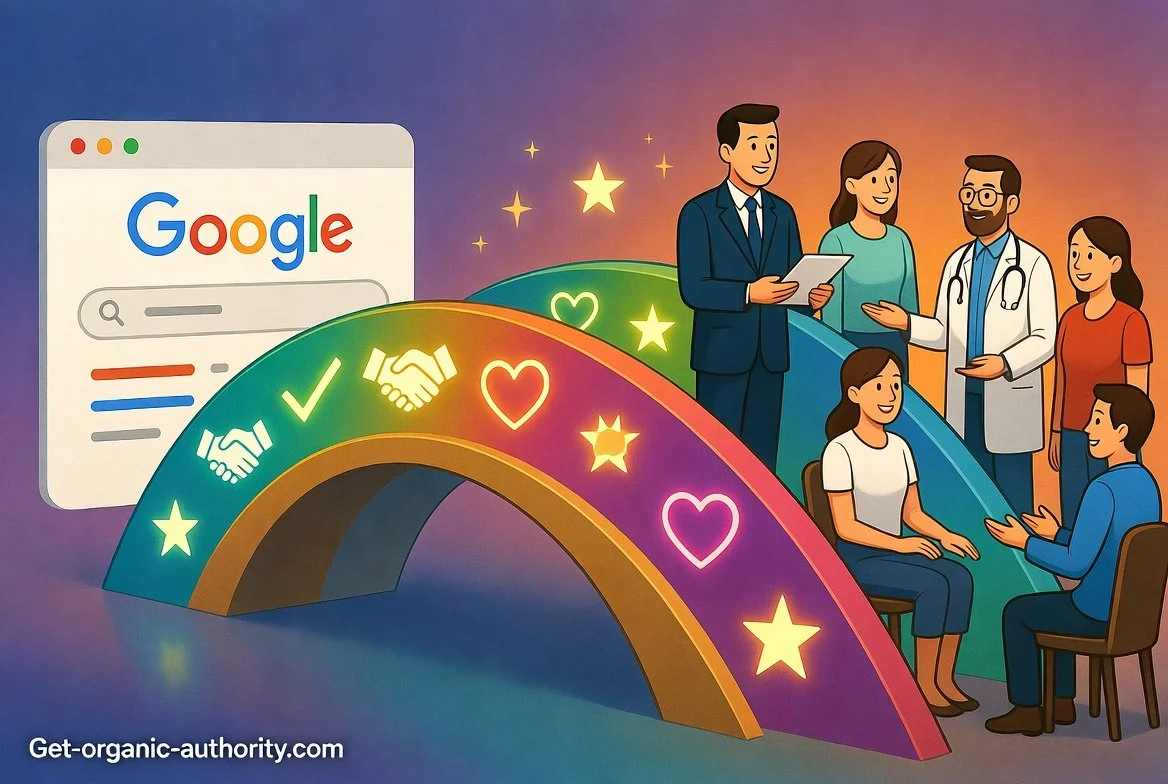
Closing the trust gap can be a challenge in high trust industries
Create content for the pre-call moment
Private practice blogs should target the questions people ask before they are ready to contact anyone. This is where long-tail keywords become powerful. These searches may have lower individual volume, but they often reveal deeper intent.
A lawyer might publish articles around “what happens if workers comp denies surgery,” “how long does a personal injury settlement take,” or “what to bring to a legal consultation.” A doctor might publish articles around “why does my shoulder hurt when I lift my arm,” “when to see a specialist for back pain,” or “what happens at your first dermatology appointment.” A therapist might publish articles around “why do I shut down during conflict,” “how trauma affects relationships,” or “what to expect in your first therapy session.”
Each article should connect to a relevant service page, a related blog article, and one larger pillar page. This is how private practice SEO becomes an ecosystem instead of a pile of orphaned posts crying quietly in the CMS.
Use a three-lane content map
For Get Organic Authority, the core clusters should stay tight: lawyers, doctors, therapists, and private practice SEO. The blog should keep feeding those lanes with articles that feel distinct but connect back to the same broader point. Trusted professionals need content systems that turn expertise into organic visibility and trust.
Here is the three-lane map.
· Lawyers: practice area pages, case-type articles, legal FAQs, consultation guides, local SEO pages, proof-based bios, and internal links from legal content to consultation paths.
· Doctors: condition pages, treatment pages, provider bios, patient education articles, local SEO pages, review signals, and internal links from symptom content to appointment pathways.
· Therapists: specialty pages, modality pages, emotional long-tail articles, first-session explainers, local therapy SEO pages, privacy-sensitive trust signals, and internal links from problem-aware content to service pages.
This connects naturally to existing ecosystem pieces like Legal Content Writing That Turns Search Traffic Into Clients, Organic SEO for Doctors and Healthcare Practices, Why Is My Therapy Website Not Getting Clients, and Organic SEO for Practices That Want to Become the Obvious Choice. Each article carries part of the system. This piece adds the missing conversion-trust layer.
Make the website feel real
Private practice websites gain trust when they feel specific, current, and human. That means provider bios with real expertise. Service pages with detail. Clear contact information. Updated photos when possible. Review strategy. Professional associations when relevant. Real location signals. Helpful FAQs. Content that answers uncomfortable questions directly.
For a law firm, “real” may mean attorney experience, case-type focus, local court familiarity, consultation process, and fee transparency. For a doctor, “real” may mean credentials, treatment philosophy, condition education, provider photos, insurance guidance, and appointment expectations. For a therapist, “real” may mean specialty clarity, session style, populations served, modality explanation, privacy reassurance, and language that sounds like a person rather than a laminated brochure in a waiting room.
The trust gap gets wider when everything sounds interchangeable. The gap gets smaller when the website could only belong to that practice.
Turn every article into a path
Every article needs a job. A post about long-tail legal keywords should support law firm service pages and link into Long-Tail Keywords for Lawyers. A post about local search should connect to Local SEO for Service Businesses. A post about broad website failure should connect to Why Is My Website Not Getting Clients From Google. The reader should never hit the end of a page and wonder what to do next.
This is the quiet power of an SEO ecosystem. One article earns a search. Another deepens trust. A service page explains the offer. A bio proves the person. A review supports the claim. A contact page makes action easy. The website becomes a guided path instead of a digital junk drawer with nice fonts.
The private practice trust checklist
Use this checklist on every lawyer, doctor, therapist, and private practice website.
· The homepage clearly says who the practice helps, where it helps, and what type of support it provides.
· Each core service has its own page.
· Each service page answers real client or patient questions.
· Provider bios include expertise, credentials, focus areas, and human detail.
· Blog articles target long-tail searches from real visitors.
· Articles link to service pages and related articles.
· Reviews, testimonials, or ethical forms of proof are visible and current.
· Contact information is easy to find on every major page.
· The next step is clear and low-friction.
· External sources and internal links support authority.
· The content sounds specific to the practice, never pasted from the beige content factory.
The bigger point
Ranking is visibility. Trust is movement.
A private practice can rank and still lose people if the website fails to explain, reassure, prove, and guide. Lawyers, doctors, and therapists need SEO content that respects the human weight behind the search. They need service pages with depth. They need internal links that create a path. They need long-form content that answers the quiet questions. They need trust signals that feel earned instead of decorative.
That is the work Get Organic Authority does for high-trust private practices. We build content ecosystems for therapists, attorneys, doctors, and professional practices that want to become easier to find, easier to trust, and harder to ignore. The internet has enough vague websites standing around in nice shoes doing nothing. Your expertise deserves better furniture.
If Google already brought someone to your website, the next job is simple. Close the trust gap. Make the page useful. Make the next step clear. Make the person feel like they found the right room.
