Why One Blog Post Won’t Save Your Website
The brutal little truth about content ecosystems, topical authority, and professional service SEO
The lonely blog post in the rain
One blog post will rarely save your website. It can be brilliant. It can be funny. It can have a title so clever it deserves a tiny hat. It can explain anxiety therapy, estate planning, dental implants, workers’ compensation, trauma treatment, EMDR, family law, orthodontics, or local business services with real care and depth. Still, by itself, one blog post is usually a single lawn chair trying to stop a tornado. Brave? Sure. Structurally doomed? Also yes.
This is where many therapists, lawyers, doctors, private practices, medical practices, and professional service firms get frustrated with SEO. They publish a blog. They wait. They refresh Google Search Console like a person checking the oven every eleven seconds. Then nothing major happens. The post gets three impressions, one click from a cousin, and a suspicious visit from a bot named something like “Crawler Steve.” Naturally, the conclusion becomes: SEO does not work.
The real issue is usually colder and more useful. The blog post was never the strategy. The blog post was one brick. The website needed a building.
For high-trust businesses, organic search works best when content lives inside a connected system. A therapist does better when anxiety counseling, trauma therapy, couples therapy, grief counseling, and EMDR pages connect to supporting articles that answer real client questions. A lawyer does better when practice area pages connect to guides, FAQs, case-type explainers, local pages, and decision-stage content. A doctor does better when treatment pages, condition pages, provider bios, insurance information, and educational articles form a clear authority map. That is the difference between publishing content and building a content ecosystem for high-trust businesses.
A blog post is a page. An ecosystem is a signal.
Google has become very clear about the direction of search quality. Its guidance on helpful, reliable, people-first content asks site owners to create content that serves people first rather than content made only to attract search traffic. Translation for everyone outside the SEO swamp: Google wants pages that actually help the person searching. Stunning. A search engine has asked humans to stop producing landfill with headings.
That matters because professional service searches are loaded with anxiety. Someone searching “therapist for panic attacks near me” is not browsing like they are comparing air fryers. Someone searching “personal injury lawyer after car accident” is probably scared, overwhelmed, and allergic to legal jargon. Someone searching “best dentist for implants near me” wants proof, safety, experience, and enough clarity to stop catastrophizing in the parking lot.
One blog post can answer one question. A content ecosystem answers the pattern of questions that surrounds the decision. It gives Google more context. It gives readers more confidence. It gives service pages more support. It gives internal links a reason to exist beyond the digital equivalent of duct tape.
This is why The Foundation exists. Get Organic Authority builds long-form SEO content into connected clusters, so a website becomes easier for Google to understand and easier for skeptical humans to trust. That is also why The Organic SEO Authority Blueprint is useful for businesses that need the first strategic map before building out the whole machine. One article can start momentum. A mapped system turns momentum into something less fragile than “we posted a blog in March and prayed over it.”
The ugly statistic hiding under cheap blog packages
Here is the statistic that should be printed on every $99 blog package in tiny warning-label font: Ahrefs found that 96.55% of pages in its study get zero traffic from Google. Zero. Not “a little.” Not “needs improvement.” Zero organic traffic from Google, like the page was published into a cave and then politely ignored by civilization.
That number explains a lot. Most pages are not automatically valuable because they exist. Existence is not a strategy. A thin article called “5 Tips for Managing Stress” has to compete with health systems, universities, national directories, major publishers, AI summaries, social platforms, and every therapy website in America that discovered the word “mindfulness” and immediately made it everyone else’s problem.
The same thing happens in law firm SEO and doctor SEO. A generic “What to Do After an Accident” post joins a battlefield with national legal sites, insurance companies, government resources, and twenty competitors with stronger internal linking. A generic “Benefits of Teeth Whitening” article has to compete with dental chains, consumer health sites, and local practices with better service pages. The internet has enough beginner articles to pave a road to the moon, which would still somehow have a pop-up asking you to join a newsletter.
The point is not that blog posts are useless. The point is that unsupported blog posts are usually invisible. A strong post needs intent, placement, internal links, a clear role in the cluster, and a path to a service page that can convert the reader. That is the quiet machinery behind effective SEO for professional service firms.
Random blogs are content confetti
Random content feels productive because it creates movement. You get a title. You get a draft. You get a publish date. Everyone gets to pretend progress happened. But random blogs often scatter relevance instead of building it. One month the practice posts about burnout. Then workplace anxiety. Then “summer wellness tips.” Then a holiday message. Then a random announcement about office hours. It is a content calendar, technically, the way a junk drawer is technically a storage system.
Search engines need patterns. Readers need pathways. Service businesses need pages that lead toward contact, scheduling, consultation, booking, intake, or a serious next step. That is why search intent for service businesses matters so much. A person searching “what is anxiety” needs education. A person searching “anxiety therapist near me” is closer to choosing help. A person searching “best trauma therapist in Miami” is practically standing at the door if the page earns enough trust.
A blog ecosystem separates these jobs. Informational posts build trust and topical depth. Comparison posts help people choose. Local posts support visibility in specific markets. Service pages convert high-intent searches. About pages and bio pages reduce skepticism. FAQ sections answer objections. Internal links move people from curiosity to confidence without making the site feel like a maze designed by a raccoon with a caffeine problem.
Internal links are not decoration
Google’s guidance on link best practices says good anchor text should be descriptive, concise, and relevant to both the page it sits on and the page it links to. That sounds simple because it is. Naturally, the internet turned it into a circus.
Internal links help Google understand which pages matter and how topics connect. They also help real people move through the decision. A blog post about panic attacks can link naturally to anxiety therapy. An article about trauma symptoms can guide readers toward trauma therapy or EMDR services. A guide about car accident claims can point toward a personal injury consultation. A page about dental implant recovery can lead toward the implant service page. This is how a website stops being a brochure and starts behaving like a thoughtful guide.
That is why Get Organic Authority treats internal linking between blog posts and service pages as strategy, not housekeeping. Internal links are the doors between rooms. Without them, every page sits alone in the dark, softly humming and wondering why nobody visits.
Topical authority is not a fancy phrase for “write more”
Topical authority means your site covers a subject deeply enough that Google and humans can see the expertise. It is not a word-count contest. It is not spraying keywords into paragraphs like parmesan at a chain restaurant. It is organized proof.
A therapist who wants to rank for trauma therapy needs more than one trauma therapy service page. The site may need supporting articles around trauma responses, dissociation, nervous system regulation, EMDR, childhood trauma, relationship patterns, trauma-informed care, and how clients know they are ready for help. A law firm that wants family law leads may need pages and posts around divorce, custody, alimony, mediation, relocation, emergency motions, property division, and local court process. A medical practice that wants more patients for a treatment needs condition education, treatment expectations, provider expertise, location signals, FAQs, and trust proof.
This is where topic clusters for service business websites start pulling their weight. A cluster gives each page a job. The pillar page becomes the central guide. Supporting articles answer narrower questions. Service pages capture buyer intent. Internal links connect everything. The result feels obvious to readers and legible to search engines, which is usually where good SEO lives.
The service page is where the money puts on shoes
A blog post can attract interest, but a service page usually turns that interest into action. For therapists, that may mean booking a consultation. For lawyers, it may mean calling the office. For doctors, it may mean requesting an appointment. For private practices, it may mean filling out an intake form. The blog starts the conversation. The service page asks the reader to take the next sane step.
That is why service pages for small businesses matter so much. A website with lots of blogs and weak service pages is like a restaurant with a beautiful menu and no kitchen. Charming concept. Hungry customers remain unimpressed.
Professional service SEO has to connect education to conversion. A blog about “How anxiety shows up in high-functioning adults” should naturally connect to anxiety therapy. A post about “What happens after a DUI arrest” should move toward the criminal defense page. A guide about “When to see a dermatologist for a rash” should connect to appointment-focused dermatology content. This is not pushy. It is helpful navigation. People came to the website with a problem. The site should stop acting coy.
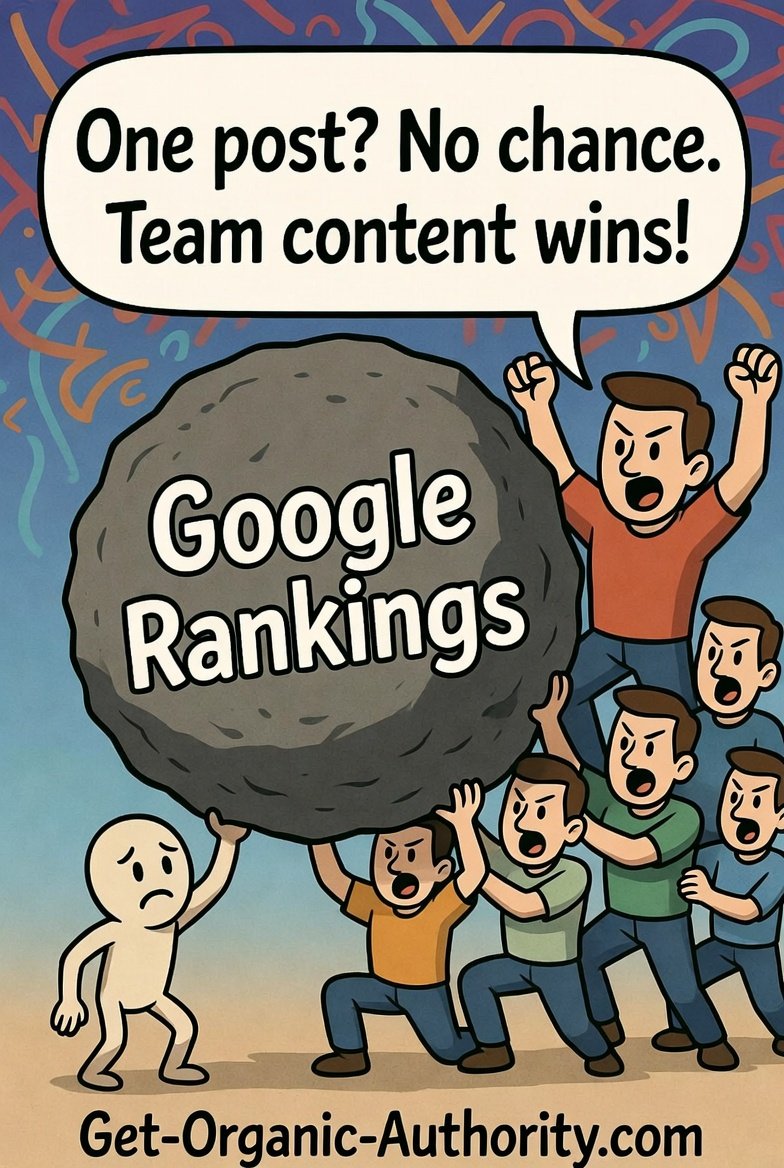
Hey bud! That looks heavy. Let’s get you some friends!
Local trust changes the whole game
High-trust local SEO has a credibility problem before it has a traffic problem. People are not only asking, “Can I find you?” They are asking, “Can I trust you with my marriage, my case, my body, my child, my finances, my diagnosis, my recovery, or my future?” Tiny stakes. Casual Tuesday.
BrightLocal’s Local Consumer Review Survey reports that 97% of consumers read reviews for local businesses, and its local SEO statistics show how often reviews shape local decision-making after search. That makes review signals, Google Business Profile visibility, website trust, and content clarity part of the same conversion story. A practice can rank and still lose the client if the page feels thin, cold, vague, or like it was assembled by an AI intern trapped in a filing cabinet.
Google also provides guidance on improving local ranking through Google Business Profile, including relevance, distance, and prominence. Your website content supports the relevance side of that equation by making your services, locations, expertise, and audience clearer. A trauma therapist in Tampa, a family lawyer in Richmond, or a dental implant provider in Orlando all need pages that help Google and humans understand exactly what they do and whom they help.
Why paid ads cannot rescue a weak content system forever
Paid ads have a place. They can create fast visibility. They can test offers. They can help a new practice get data while organic search matures. But ads do not fix weak positioning, vague service pages, thin content, unclear trust signals, or a website that reads like it was written during a committee meeting inside a beige hallway.
WordStream’s 2026 Google Ads benchmarks show that legal, healthcare, dental, and business service clicks and leads can be expensive. When every click costs real money, the landing page needs to earn the visit. Organic content ecosystems help reduce total dependence on paying for every visitor by building durable pages that can keep attracting and educating prospects over time.
SparkToro’s zero-click search research also shows how much search behavior stays inside Google’s results environment. That makes brand trust, clear titles, strong snippets, local visibility, reviews, and helpful content even more important. When someone does click through, the page has to justify the trip. Nobody wants to leave Google just to meet a 300-word blog post wearing stock photography and fear.
The better model: build one cluster at a time
The smarter approach is simple enough to explain and hard enough to execute well: build one authority cluster at a time. Pick a core service. Map the search intent. Strengthen the service page. Publish supporting posts around the real questions people ask before they buy, book, call, consult, or schedule. Link the posts together. Link them back to the service page. Update the cluster as the market changes. Repeat with the next service.
For a therapist, the first cluster might be trauma therapy. For a lawyer, it might be car accident claims. For a doctor, it might be a high-value treatment or condition. For a private practice, it might be the service that best matches revenue, demand, differentiation, and local opportunity. This is how content stops being a guessing game and becomes an asset.
A strong cluster can include a pillar page, service page, location variation, provider bio support, FAQ article, comparison article, symptom-focused article, process article, cost article, and trust-building article. The point is to surround the core topic from every angle a real client, patient, or prospect might care about. Google’s SEO Starter Guide reminds site owners that SEO changes can take time to show up in search results, so clusters need patience, maintenance, and enough depth to compete. Apparently, Google has refused to rank a page instantly just because everyone involved feels emotionally ready. Rude, but consistent.
The dogfooding part matters
Get Organic Authority is built around a simple idea: if content ecosystems work, the company should use its own system in public. That is dogfooding. It means the strategy is not hiding in a slide deck. It is being used on the site itself through pillar pages, supporting posts, service pages, internal links, and niche-specific content for lawyers, doctors, therapists, private practices, and other high-trust businesses.
That matters because many SEO companies sell outputs. Ten blogs. Four posts. Two pages. A monthly report so dense it could legally be classified as insulation. Get Organic Authority sells structure. The goal is to make the site more findable, more trustworthy, and more conversion-ready over time. The work becomes a system, not a content vending machine.
For professional service businesses, this difference matters. A therapist with an invisible website needs more than blog volume. A lawyer losing cases to louder competitors needs authority signals and conversion paths. A doctor relying on paid ads needs durable organic pages. A private practice trying to grow needs a site that explains, proves, supports, and converts. That is the job of an ecosystem.
The tiny villain: content with no job
Every page on a professional service website should have a job. Some pages build trust. Some answer questions. Some capture local intent. Some support a service. Some convert. Some help Google understand the topic. Some help a nervous human feel safe enough to take the next step.
The problem with many blog strategies is that nobody assigns jobs. The practice publishes a post because “we need content.” That phrase has funded more weak marketing than perhaps any other sentence in modern business, right behind “let’s make it pop.”
A stronger question is: what does this page need to do? Does it support a service page? Does it target a long-tail keyword? Does it answer a buyer objection? Does it build topical authority? Does it help local visibility? Does it show expertise? Does it move readers closer to trust? If the answer is “it fills the calendar,” the page is probably content confetti. Pretty for three seconds, then impossible to clean up.
What a real content ecosystem looks like
A real content ecosystem for therapist SEO, lawyer SEO, doctor SEO, and private practice SEO usually has several layers. The homepage explains the business clearly. Service pages match high-intent searches. Pillar pages give complete guides to major topics. Supporting blog posts answer narrower questions. About and bio pages build personal trust. Location pages support local relevance. FAQs handle objections. Internal links connect related ideas. Calls to action feel useful rather than desperate.
That system helps readers move naturally. Someone may land on a post about trauma triggers, read more about EMDR, check the therapist bio, review the trauma therapy service page, and then book a consultation. A legal visitor may land on an accident guide, read about settlement timelines, check attorney experience, and then call. A patient may read about a symptom, learn about the treatment, review the doctor’s credentials, and schedule. This is the quiet path from search to trust to action.
Nielsen Norman Group’s work on trustworthy web design reinforces a basic truth everyone already feels: users judge credibility quickly. Clio’s research on how clients find lawyers also shows how digital discovery and reputation matter in the legal buying process. Different industry, same human behavior. People search, judge, compare, hesitate, then choose the business that feels clearest and safest.
The final answer: one blog post can help, but it needs friends
One blog post can absolutely matter. It can rank. It can earn links. It can answer a real question. It can support a service page. It can help a skeptical prospect feel understood. But one post usually works best as part of something larger. Alone, it is a flyer on a windshield. Inside an ecosystem, it is a doorway.
The future of SEO for therapists, lawyers, doctors, private practices, medical practices, local service businesses, and professional service firms belongs to brands that build authority on purpose. Not random blogs. Not cheap content farms. Not AI blurbs with the emotional range of a toaster. Not keyword stuffing dressed up as strategy. Real content. Real structure. Real internal links. Real proof. Real paths from question to trust to conversion.
That is the difference Get Organic Authority is built to create. If your website has been publishing lonely little blog posts and wondering why Google has the enthusiasm of a DMV clerk, it is time to stop feeding the void one article at a time. Build the system. Build the cluster. Build the authority.
Ready to stop publishing into the void?
Get Organic Authority helps high-trust businesses turn scattered content into a connected SEO system built around topical authority, service-page support, internal linking, search intent, and trust-building content. Start with The Organic SEO Authority Blueprint if you need the first strategic pillar and roadmap. Choose The Foundation if you are ready for a monthly content ecosystem that keeps building depth, relevance, and authority. Or explore Get Organic Authority to see how organic authority can become the part of your marketing that compounds instead of constantly asking for another ad budget like a raccoon with a tiny invoice.
