“The Backlink Bait Library: How Lawyers, Doctors, and Therapists Create Resources Other Sites Actually Want to Link To.”
Backlinks Are Easier When Your Website Is Worth Linking To
Most service businesses want backlinks the way toddlers want cookies: immediately, emotionally, and with no real plan for what happens afterward. A lawyer wants more links because the competitor across town has stronger rankings. A doctor wants links because the other clinic shows up first for every high-value search. A therapist wants links because the practice website has helpful writing, a tasteful font, and the online visibility of a folded napkin under a couch.
The instinct is not wrong. Backlinks still matter. Google says links help it discover pages and determine relevance, and Google also tells site owners to use descriptive anchor text so people and search engines can understand what each linked page is about. That means links are not decorative internet jewelry. They are signals, paths, citations, referrals, and little digital votes of confidence when they come from places that make sense.
The problem is how most businesses chase them. They start with outreach before they build anything worth outreach. They send emails that sound like a hostage note from a spreadsheet. They ask strangers to link to a homepage, a generic blog post, or a service page that offers the thrilling literary experience of “we provide compassionate care” repeated in slightly different outfits. Then they wonder why nobody responds. A stunning mystery. Archaeologists will be puzzled for centuries.
The better strategy is simple: create assets people have a reason to cite. That is the point of this supporting article for Backlink Strategy for Practices That Want to Build Real Organic Authority. Backlink bait can sound sleazy, like something a guy named Lance sells from a webinar bunker. But the clean version is powerful. A linkable asset is a page, guide, checklist, research summary, local resource, data roundup, glossary, or expert explainer that makes another website better when they link to it.
That distinction matters for lawyers, doctors, therapists, and high-trust professional service businesses because trust is the sale before the sale. The person reading your content may be scared, hurt, embarrassed, confused, or deciding between three providers who all claim to care deeply. A strong linkable asset does more than attract backlinks. It proves usefulness in public. It says, “This business explains hard things clearly.” That is authority with its sleeves rolled up.
Ahrefs found that 96.55% of pages get no organic traffic from Google, which is a brutal little statistic and honestly rude to everyone who ever published a 600-word blog post called “Why SEO Matters.” Ahrefs also points to backlinks, traffic-potential topics, and search intent as important parts of staying out of the invisible pile. Translation: useful content still needs strategic demand, internal support, and authority signals.
SparkToro reported in 2026 that 68.01% of Google searches ended without a click. That makes every earned visit more valuable. You cannot afford to send people into a thin website that leaks trust. If a backlink brings someone to your site, that visitor should land inside a connected system: a resource that answers the question, internal links that guide the next step, service pages that explain the offer, and proof that makes choosing you feel safer.
This is where Get Organic Authority builds differently. The goal is not to collect random blog posts like shiny internet bottle caps. The goal is to build a content ecosystem where linkable assets support pillars, service pages, local SEO, search intent, and trust. The Organic SEO Authority Blueprint can map the first major authority asset. The Foundation builds the larger system month by month with long-form articles, topic clusters, and internal links. Because yes, the website should have an actual nervous system. Apparently that still counts as innovation.
What Counts as a Linkable Asset?
A linkable asset is content designed to be useful beyond your own sales funnel. It still supports business growth, but it earns attention by helping the reader first. It gives journalists, bloggers, associations, local organizations, referral partners, and other websites something worth citing. People link to pages that make them look helpful when they share them. They do not usually link to your contact page unless your contact page contains buried treasure or a municipal scandal.
For high-trust businesses, the best linkable assets usually sit in the sweet spot between expertise and public usefulness. They explain a confusing process. They summarize important data. They answer a sensitive question with care. They give a local audience a resource they can actually use. They translate professional knowledge into plain language without turning the article into alphabet soup.
A lawyer might create a state-specific guide to what injured workers should document after a workplace accident. A doctor might publish a patient-friendly guide to knee pain red flags and appointment expectations. A therapist might write a compassionate resource on how trauma can show up in daily life. A private practice might publish a local guide to support resources, crisis lines, community organizations, or specialty providers.
Those assets also fit the larger map in The High-Trust Website Content Map. A strong website for lawyers, doctors, and therapists needs service pages, bio pages, proof, FAQs, local SEO pages, pillar articles, supporting blogs, and conversion paths. Linkable assets add another layer: outside websites now have something worth pointing toward.
The cleanest linkable assets are useful even if the reader never becomes a client. That sounds counterintuitive until you remember how trust works. People trust businesses that educate generously. They cite businesses that explain well. They return to businesses that made the confusing thing less horrible. In high-trust industries, helpfulness is not charity. It is positioning.
The Backlink Bait Library: Resource Types Worth Building
Here is the fun part. Linkable assets are not one thing. They are a library. Build the right shelves, stock them with real value, then stop acting shocked when other websites finally have a reason to mention you.
1. The “What to Do Next” Checklist
Checklists work because people search in moments of confusion. A car accident victim needs to know what to document. A patient needs to know what to bring to an appointment. A therapy client may want to understand what to expect before the first session. A checklist turns anxiety into steps, which is why it earns trust faster than another inspirational paragraph about “your journey.”
Examples: “What to Document After a Workplace Injury in Virginia,” “What to Ask Before Choosing an EMDR Therapist,” “What to Bring to Your First Orthopedic Appointment,” or “Private Practice Website Checklist for High-Trust Businesses.” Each one can link naturally to a service page, an FAQ, a bio, and a related pillar article.
2. The Local Resource Hub
Local resource pages are backlink magnets when they are actually useful. A therapist can build a local mental health resource guide. A doctor can build a community health resource page. A law firm can build a local injured-worker resource hub. Local nonprofits, schools, community organizations, and referral partners may link to a page that genuinely helps their audience.
This supports local SEO too. Google’s local ranking guidance explains that local visibility is shaped by relevance, distance, and prominence. A local resource hub helps reinforce where the business operates and what community it serves. It also makes the practice look less like a floating digital business card and more like part of a real place. Very advanced stuff: geography.
3. The Plain-English Explainer
Every high-trust industry has topics people pretend to understand while quietly panicking. Lawyers have deadlines, claims, liability, appeals, damages, settlements, and procedural nightmares. Doctors have symptoms, treatments, tests, risks, recovery timelines, and medical terms that sound like a wizard sneezed. Therapists have modalities, diagnoses, trauma responses, attachment patterns, insurance terms, and fears people barely know how to say out loud.
A plain-English explainer makes a hard topic readable. It can attract backlinks from resource pages, partner blogs, journalists, and organizations that need a clear reference. It also pairs beautifully with The Invisible Searcher, because many clients search around the formal term before they know what to call the problem.
4. The Myth-Busting Guide
Myth-busting content works because myths spread faster than facts, probably because facts have jobs and myths have free time. “You only need therapy if something is seriously wrong.” “A denied insurance claim means the case is over.” “Knee pain always means surgery.” “SEO is just keywords.” These myths create perfect content opportunities.
A strong myth-busting article can earn links because it gives other writers a clean way to correct misinformation. It also creates natural internal links to service pages and supporting articles. For example, a law firm myth guide can link into practice area pages. A therapist myth guide can link into trauma therapy, anxiety therapy, couples counseling, and first-session FAQ content. A doctor myth guide can link into condition pages and provider bios.
5. The Data Roundup or Trend Commentary
Data-backed content gives people something concrete to cite. You do not always need original research, though original research is powerful when you can pull it off. A smart roundup can summarize credible findings from sources like Google, Pew, BrightLocal, Ahrefs, SparkToro, medical journals, legal surveys, local government data, or professional associations.
For example, a medical practice could publish a “What Patients Actually Search Before Booking Care” article using credible health information research. A law firm could publish a local accident trend resource. A therapist could publish a guide to anxiety, burnout, and help-seeking patterns using reputable mental health sources. Get Organic Authority can use pieces like this one to support SEO Content Ecosystems for High-Trust Businesses and show how dogfooding works in public. Deliciously practical.
6. The “Best Questions to Ask” Guide
People love question guides because they help them feel less foolish when they finally call. “Questions to Ask Before Hiring a Workers’ Comp Lawyer.” “Questions to Ask Before Choosing a Trauma Therapist.” “Questions to Ask Your Doctor About Chronic Knee Pain.” These articles attract links because they empower consumers without overselling.
They also convert. A good question guide naturally reveals what matters: credentials, process, fit, cost, timeline, risk, location, communication, and next steps. By the time the reader finishes, they understand the decision better and may see why your practice or firm is the safer choice. This connects directly to Your Website Got the Click. Now What?, because traffic becomes valuable only when content keeps people moving toward trust.
7. The Glossary That Does More Than Define Words
Glossaries are underrated because most are written with the energy of a dishwasher manual. A good glossary explains terms in plain English, gives examples, and links to deeper pages. For lawyers, this could cover claim terms, hearing terms, injury terms, or family law language. For doctors, symptoms, tests, conditions, and treatments. For therapists, modalities, therapy terms, trauma language, and insurance vocabulary.
A glossary can earn links from educators, nonprofits, local resource pages, and other sites that need a beginner-friendly reference. It can also build internal links like a quiet little SEO machine. Each term can point to a service page, FAQ, or supporting article. This is exactly where How to Internally Link Blog Posts to Service Pages Without Making a Mess earns its keep.
How to Hunt Backlinks Without Becoming an Internet Goblin
Once the asset exists, backlink hunting becomes less embarrassing. You are no longer emailing strangers with “Please link to us because we exist,” which has the persuasive force of a pigeon in a vest. You are sharing a resource that could help their audience. That changes the tone from begging to usefulness.
Start with warm opportunities. Professional associations. Bar associations. Medical associations. Therapy directories with real editorial standards. Referral partners. Nonprofits. Local news outlets. University resource pages. Podcasts. Event pages. Chamber of commerce profiles. Vendor pages. Software customer stories. Community organizations. Sponsorship pages. Unlinked brand mentions. These are not random targets. They are places where your credibility may already have a reason to appear.
Then match the asset to the audience. A local mental health nonprofit may care about a therapist’s guide to trauma resources. A chamber of commerce may care about a local business growth checklist. A journalist may care about data commentary. A law school clinic may care about a plain-English legal resource. A medical partner may care about patient education. Relevance is the difference between outreach and spam wearing cologne.
Do not buy manipulative links. Google’s spam policies define spam as tactics meant to deceive users or manipulate search systems, and Google says violations can lead to lower rankings or removal from results. That does not mean every backlink effort is dangerous. It means the strategy should be grounded in genuine usefulness, relationship-based outreach, earned citations, honest sponsorship tags where appropriate, and resources that deserve the mention. Tiny distinction. Only the future of the site depends on it.
Anchor text matters too. Google’s link best practices say descriptive, concise, relevant anchor text helps people and Google understand the linked page. That means “trauma therapy resource guide” is better than “click here.” “Virginia workers’ compensation checklist” is better than “website.” This applies to external backlinks and internal links. Your linkable asset should use natural internal anchors to send readers toward relevant service pages, pillar pages, and next-step content.
How Linkable Assets Feed the Whole Ecosystem
A backlink should never land on a dead end. If a journalist links to your patient guide, that guide should point to the related service page. If a nonprofit links to your trauma resource, that page should connect to your trauma therapy page, FAQ content, provider bio, and relevant articles. If a legal association links to your workers’ comp checklist, the checklist should send readers toward the workers’ compensation service page and deeper guides.
This is why Why One Blog Post Won’t Save Your Website matters so much. A single asset can be useful. A connected asset becomes part of an authority system. The asset attracts links. Internal links distribute context. Service pages capture buyer intent. Pillars organize the subject. Supporting articles answer related searches. The whole thing starts acting like a website instead of a junk drawer with a logo.
This also supports Search Intent for Service Businesses. Some linkable assets target informational intent. Some support comparison intent. Some support local intent. Some warm up future buyers before they are ready to call. The key is knowing what job each page performs. A data roundup may attract links and awareness. A checklist may capture practical search intent. A service page turns readiness into action. A bio page builds trust. An FAQ handles friction.
For high-trust businesses, that structure is everything. A law firm does not only need more traffic. It needs qualified consultation requests. A medical practice does not only need rankings. It needs patients who understand the service and feel confident booking. A therapist does not only need blog views. They need the right people to feel safe enough to reach out. Linkable assets help more people enter the system, but the system has to be ready.
That is the larger promise of organic authority. You are not trying to trick Google. You are trying to make real expertise visible, organized, connected, cited, and useful. What a radical concept. Somebody alert the SEO conference panel and prepare the tiny branded water bottles.
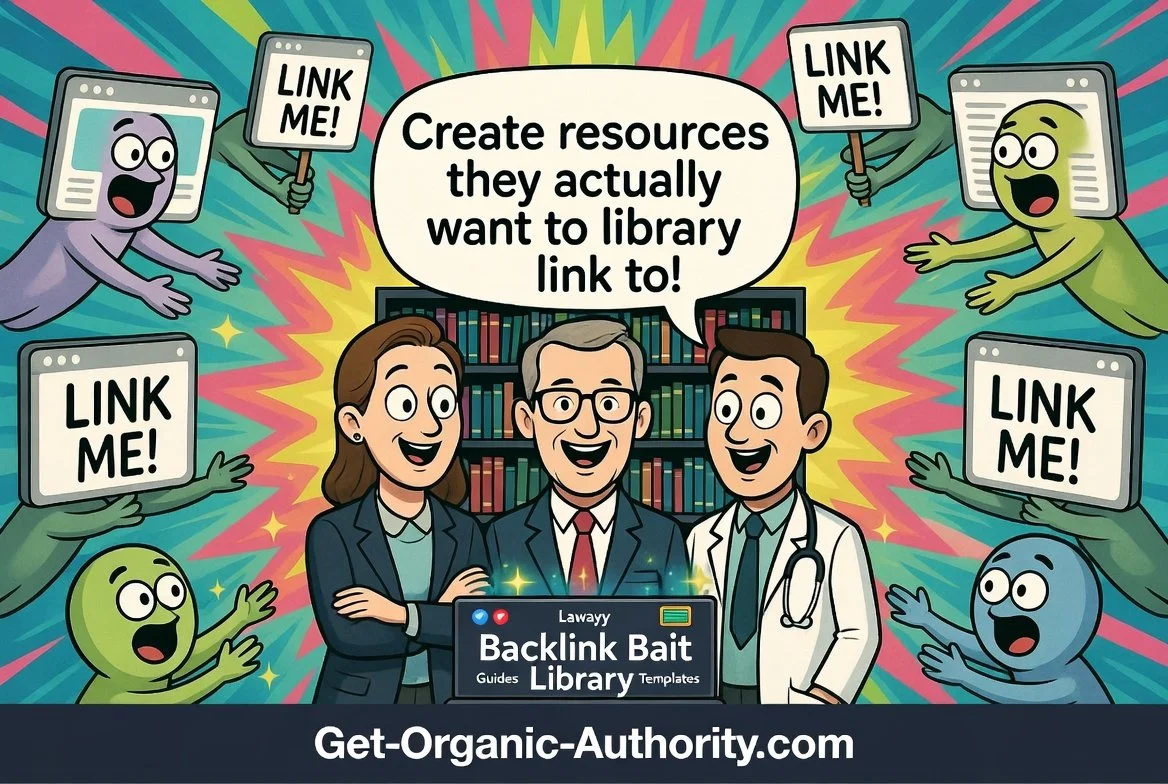
Make it worth mentioning for credible resources!
Industry Examples: What to Build First
Therapists
A trauma therapist could create “How Trauma Shows Up in Everyday Life: A Plain-English Guide for Adults Who Feel Stuck.” It could link to trauma therapy, EMDR therapy, anxiety therapy, first-session FAQs, and related content like SEO for trauma therapists. Outreach targets could include local wellness directories, treatment centers, university counseling resource pages, community nonprofits, and podcasts.
A couples therapist could create “Questions to Ask Before Starting Couples Therapy After Betrayal.” It could support a couples therapy service page and attract links from relationship blogs, local wellness partners, and family support organizations.
Law Firms
A workers’ compensation attorney could create “What to Document After a Workplace Injury in Virginia.” That resource could link to workers’ comp service pages, denied claim articles, hearing guides, and consultation CTAs. Outreach targets could include union resource pages, local safety organizations, community legal resources, and local publications.
A personal injury lawyer could create a local accident checklist or “What to Do After a Hit-and-Run” guide. That asset gives referral partners and local sites something practical to share, while internally supporting car accident and injury service pages.
Doctors and Medical Practices
An orthopedic practice could create “Knee Pain Red Flags: When to Schedule an Evaluation.” The article should stay evidence-aware, avoid diagnosis, and guide readers toward appropriate care. It could attract links from fitness blogs, local wellness partners, sports organizations, and patient education resources.
A dermatology practice could create “A Plain-English Guide to Skin Checks, Moles, and When to Book an Appointment.” It could support skin cancer screening, medical dermatology, and provider bio pages while helping patients understand the next step.
Get Organic Authority
Get Organic Authority can keep dogfooding this strategy by publishing supporting articles that feed pillars. This article supports the backlink pillar. The service pages article supports the high-trust website map. The therapist traffic article supports the therapist SEO cluster. The doctor competitor article supports the local SEO and healthcare SEO cluster. Each piece should link across the ecosystem like it was built by someone who knows what hallways are for.
The Simple Backlink Asset Workflow
1. Pick one high-value service page that needs more authority.
2. Identify the informational, local, emotional, or practical questions around that service.
3. Choose one linkable asset format: checklist, guide, local hub, glossary, myth-busting article, expert roundup, or data-backed resource.
4. Write the asset with credible sources, useful subheads, examples, and plain language.
5. Internally link the asset to the related service page, pillar page, supporting articles, and CTA.
6. Build a small outreach list of relevant partners, directories, organizations, podcasts, journalists, and local sites.
7. Pitch the asset as a resource for their audience, not as a favor for your rankings.
8. Track links, referral traffic, rankings, and assisted conversions over time.
9. Add supporting articles around the asset so it becomes part of a topic cluster instead of a lonely page wearing a party hat.
Soft CTA: Start With the Asset, Then Build the System
If your website has service pages but nothing worth citing, start with one strong linkable asset. If the whole site feels scattered, start with The Organic SEO Authority Blueprint. It gives the website a strategic anchor: one long-form pillar article built around your core service, niche, or audience, with future supporting content in mind. That is usually a better first move than buying backlinks from a stranger whose profile picture looks like it was generated by a haunted vending machine.
Final CTA: Build Authority People Can See, Cite, and Trust
Backlinks are not magic. They are proof. They work best when your website already has something useful to prove. For lawyers, doctors, therapists, and private practices, the smartest backlink strategy starts with content that deserves attention: guides, checklists, local resources, plain-English explainers, FAQs, data-backed articles, and expert commentary that makes hard decisions easier for real people.
That content should feed the rest of the website. Linkable assets should support service pages. Service pages should convert. Pillar pages should organize expertise. Supporting articles should answer real searches. Internal links should connect the whole thing. Outside links should confirm the value of what you have built. That is how organic authority compounds.
If you want one strong asset to begin the ecosystem, start with The Organic SEO Authority Blueprint. If you want consistent authority-building content that creates topic clusters, long-tail keyword coverage, internal links, and link-worthy resources month after month, build with The Foundation. Get Organic Authority builds the content system that helps high-trust businesses become easier to find, easier to cite, and easier to choose.
Because your website should not have to beg for attention. It should earn it with resources strong enough to make other sites say, “This is useful.” A shocking standard, yes. But someone has to raise the bar before the internet drowns in another batch of 500-word SEO oatmeal.
